By anglers, for anglers
Read the fjord.
Find the fish.
Find the most promising fishing spots based on species, depth, seabed, habitat and conditions at sea.
FjordSpot runs in your browser right now — on your phone too. The Android app is in closed testing on Google Play. Create an account and we’ll let you know.
Click to view full size
What happens while you fish
The map is half the job. The rest is what happens with a rod in your hands — and afterwards.
🎤 Log a catch by voice
- Say the species, weight and lengthIt goes straight into your log while you keep both hands on the rod.
🌙 The conditions come along
- Tide, moon phase and air pressureAdded to every catch automatically. Over time you see the pattern in your own trips.
🧭 GPX in and out
- Take the spots to the boatExport to your plotter — or import the marks you already have.
⚖️ Size limits and closed seasons
- The rules where you fishMinimum sizes and closed seasons from official sources.
🦺 Fishing alone
- Check-in with a countdownMiss a check-in and your contact gets an email with a link to your live status.
- A tool, not an emergency serviceIn an emergency: call 112 or 113, or use VHF channel 16.
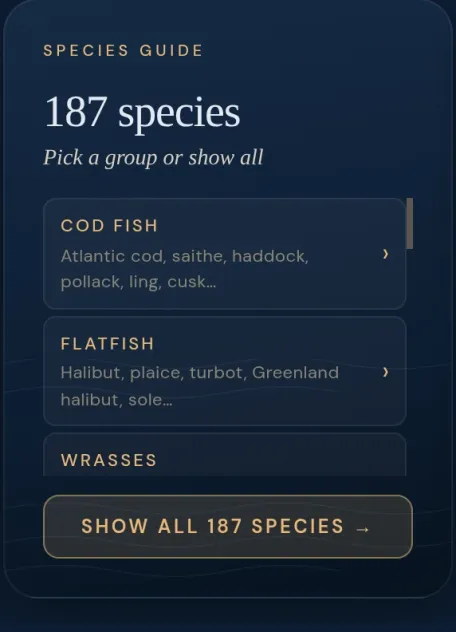
🐟 Species guide
- 187 species in the guide138 of them are realistically catchable in Norway. Painted in watercolour by Sakke Yrjölä.
The map isn't decoration.
It's your workspace.
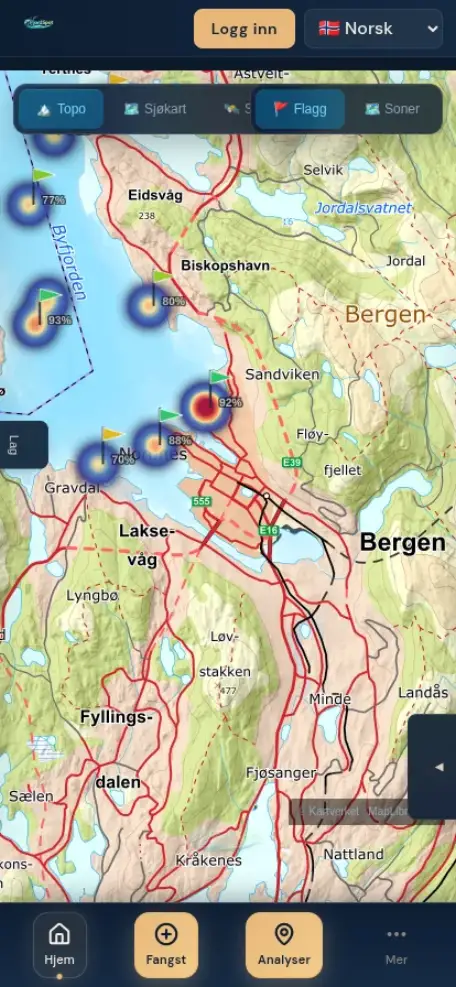
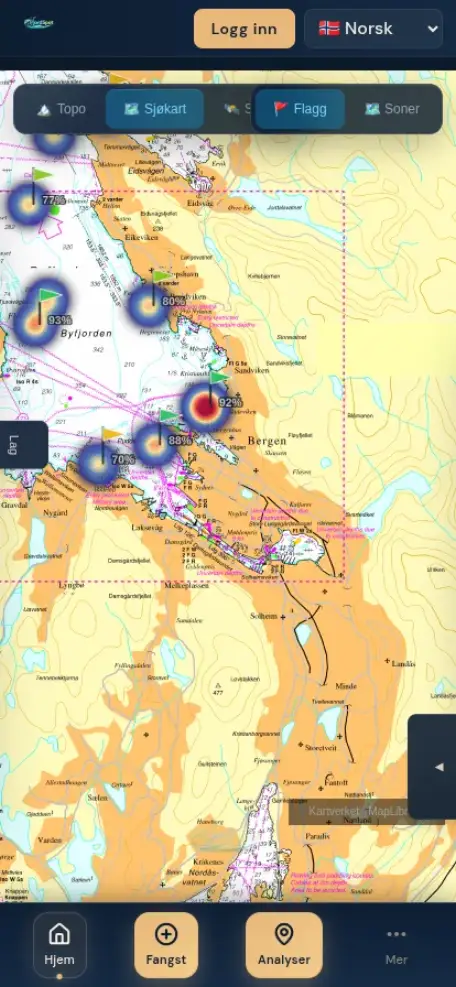
The HSI model scores how promising an area is for each individual species — the flags show you the hits right on the map.
- 138 species to fish for — each with its own HSI profile
- Depth data from Kartverket — over 10 million measurements
- Pick a species and a radius — get the hits ranked
Click to view full size
One card.
The whole answer.
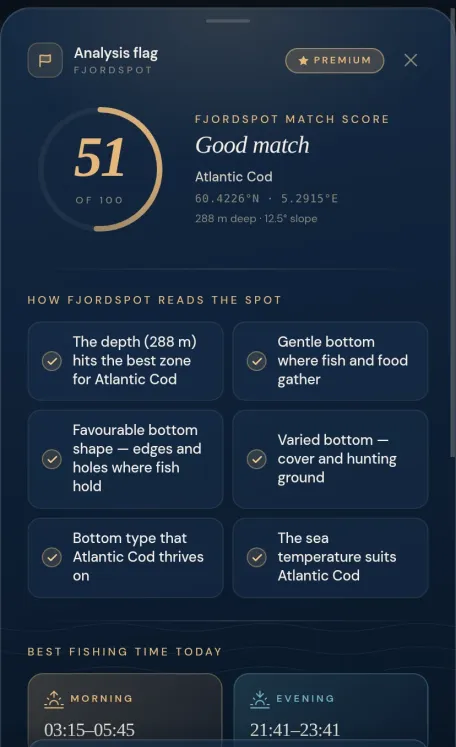
Match score, why the spot is promising, the best time to fish today, the weather right now and the tide — all in one place.
- Match score with reasoning (depth transition, steep edge…)
- Best fishing time, morning and evening
- Wind, temperature and tide curve
Click to view full size
Every trip makes
the next one better.
Your own overview: species, a growing history of saved spots and catches. “Together we read the fjord.”
- Private overview of species and spots
- Save fishing spots, build your history
- Share with an approximate position
Click to view full size
“The best angler isn't the one who casts farthest — but the one who knows where the fish are.”
The FjordSpot philosophy
Moments from the sea
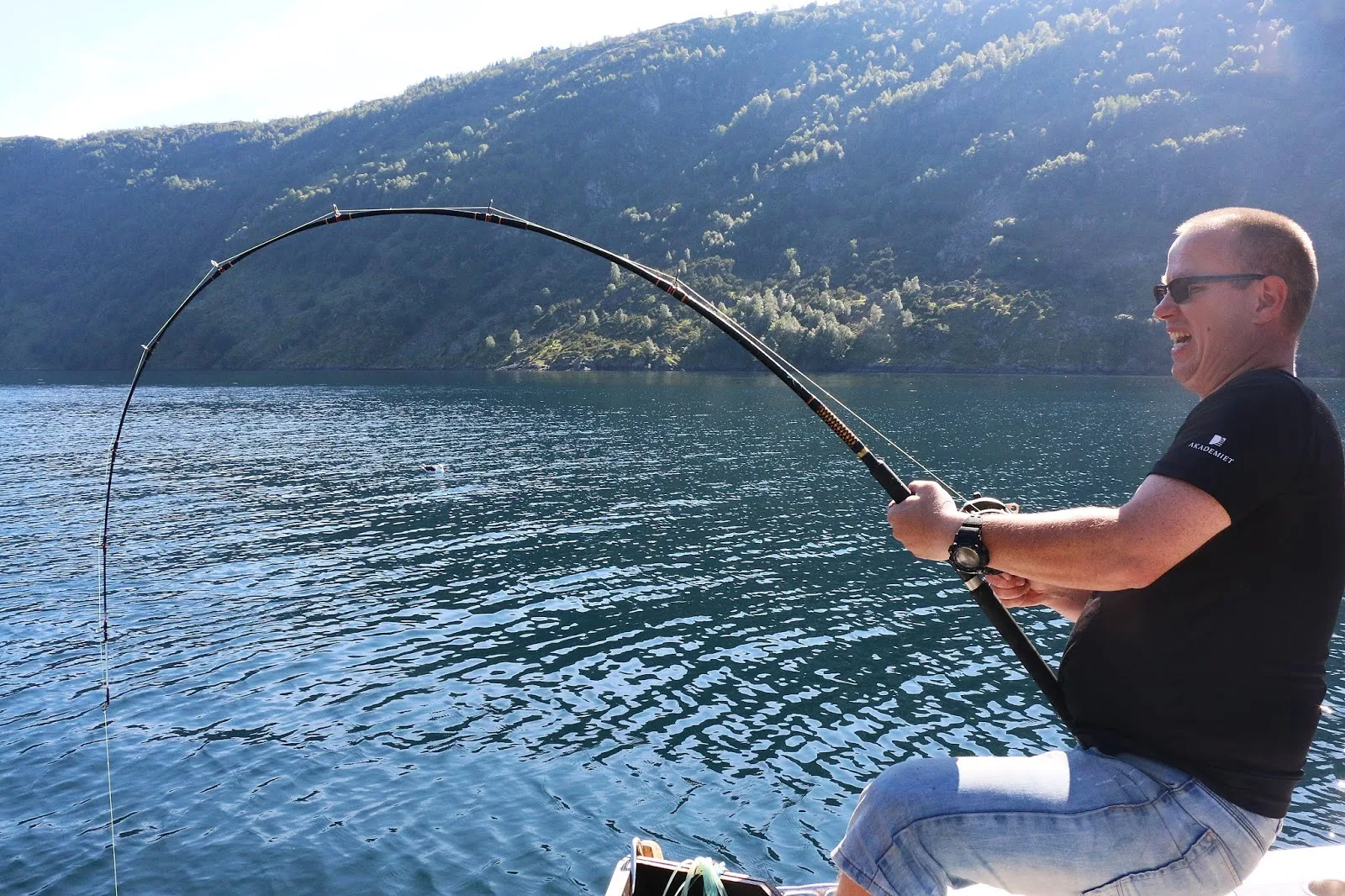
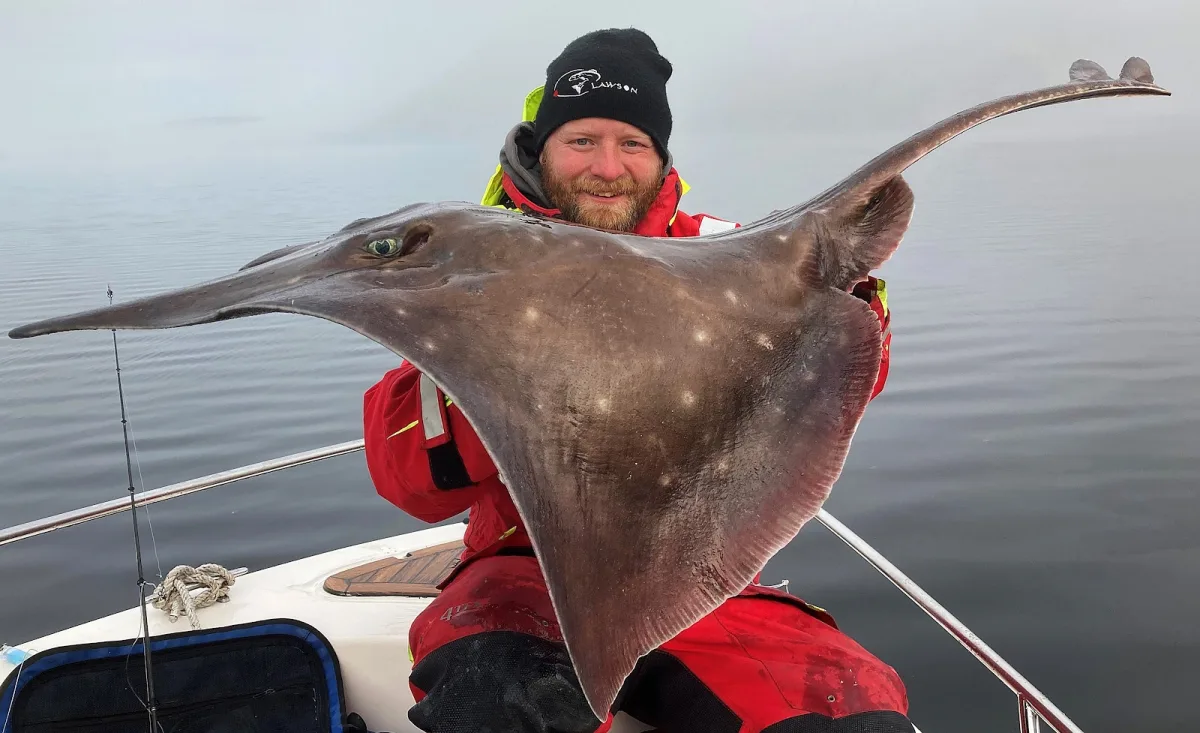
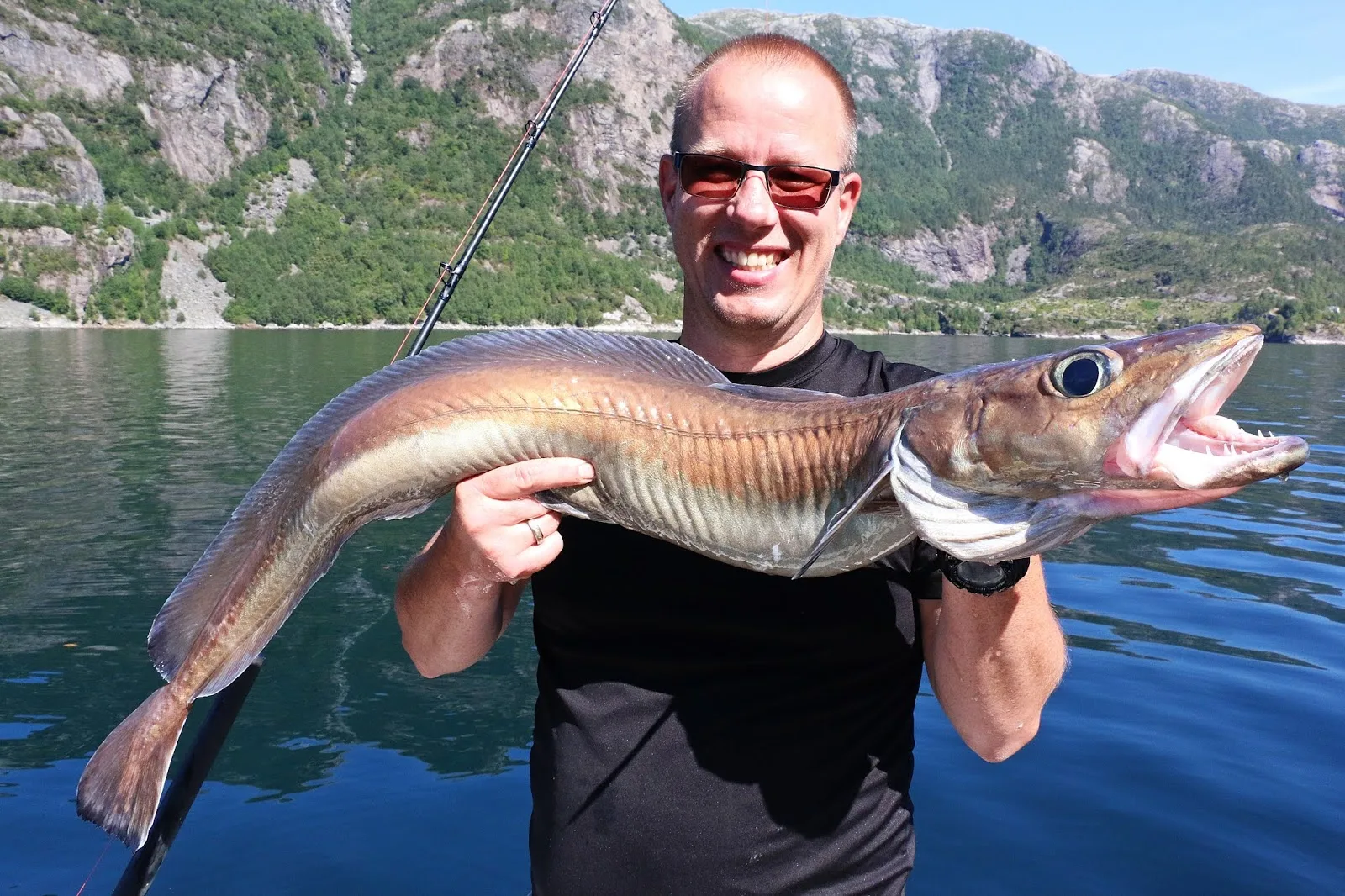
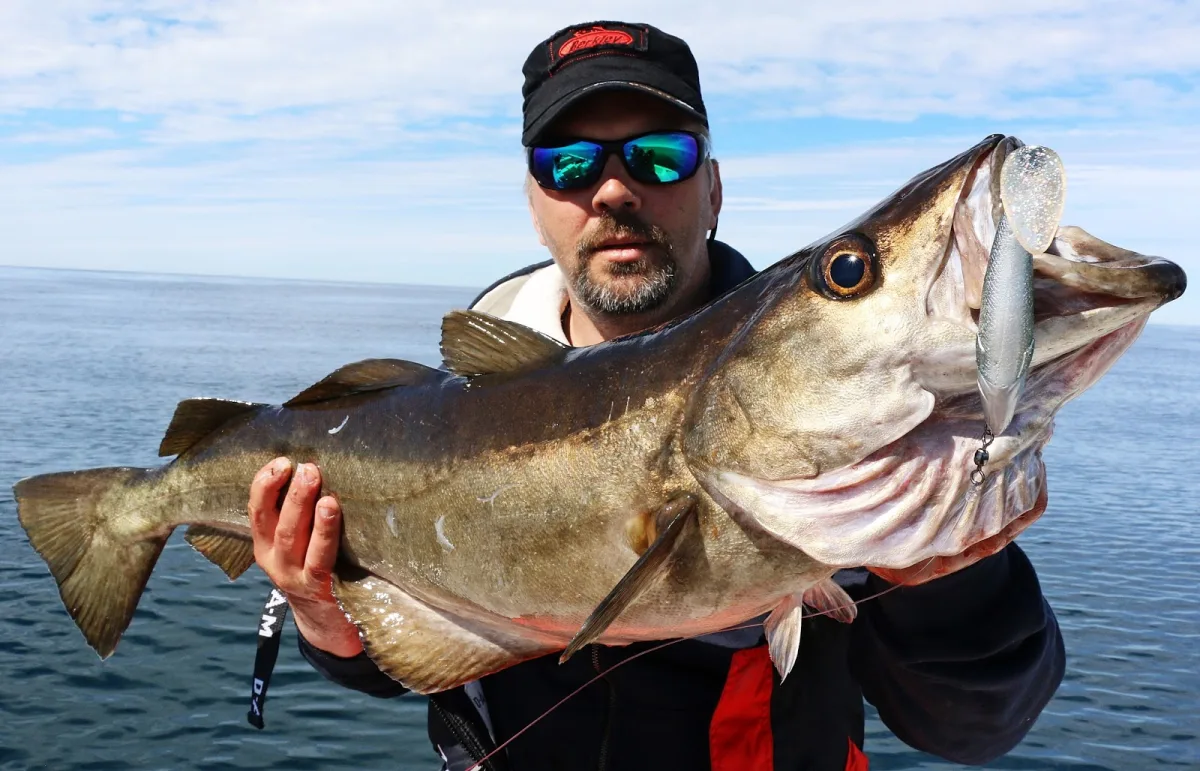
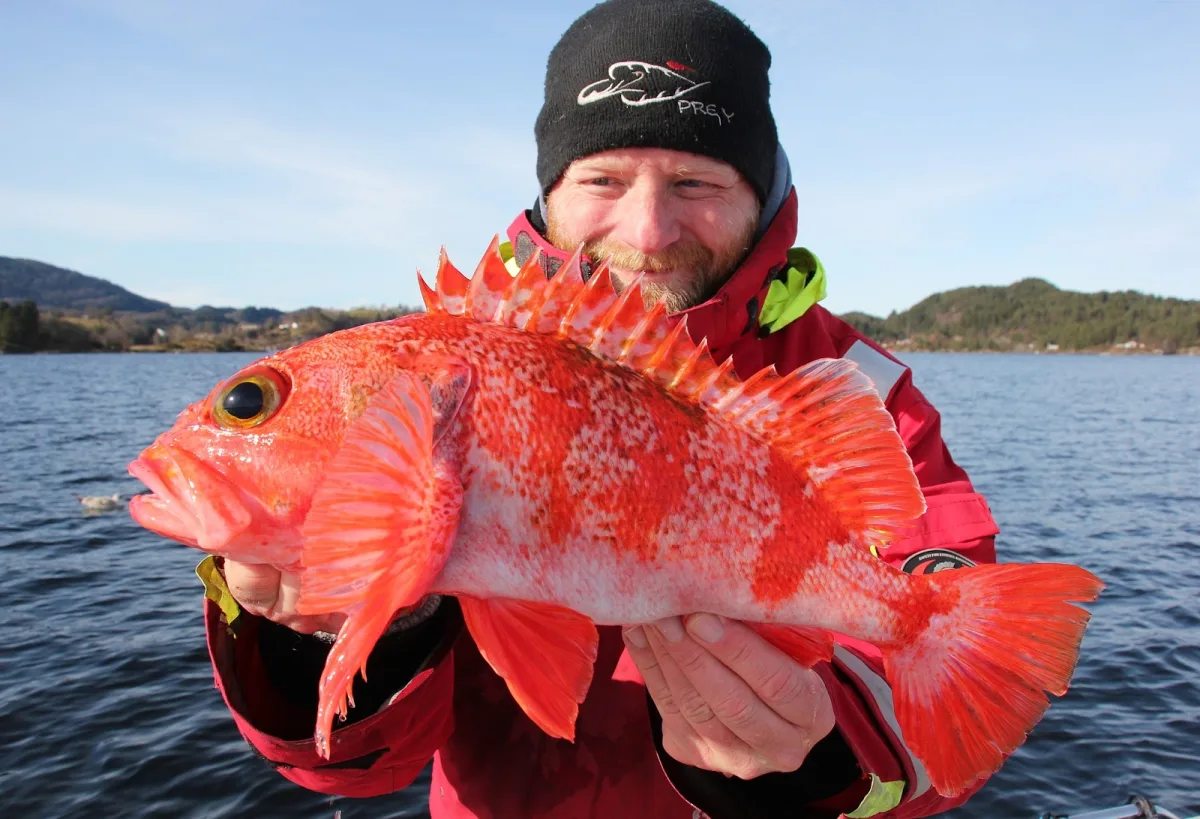
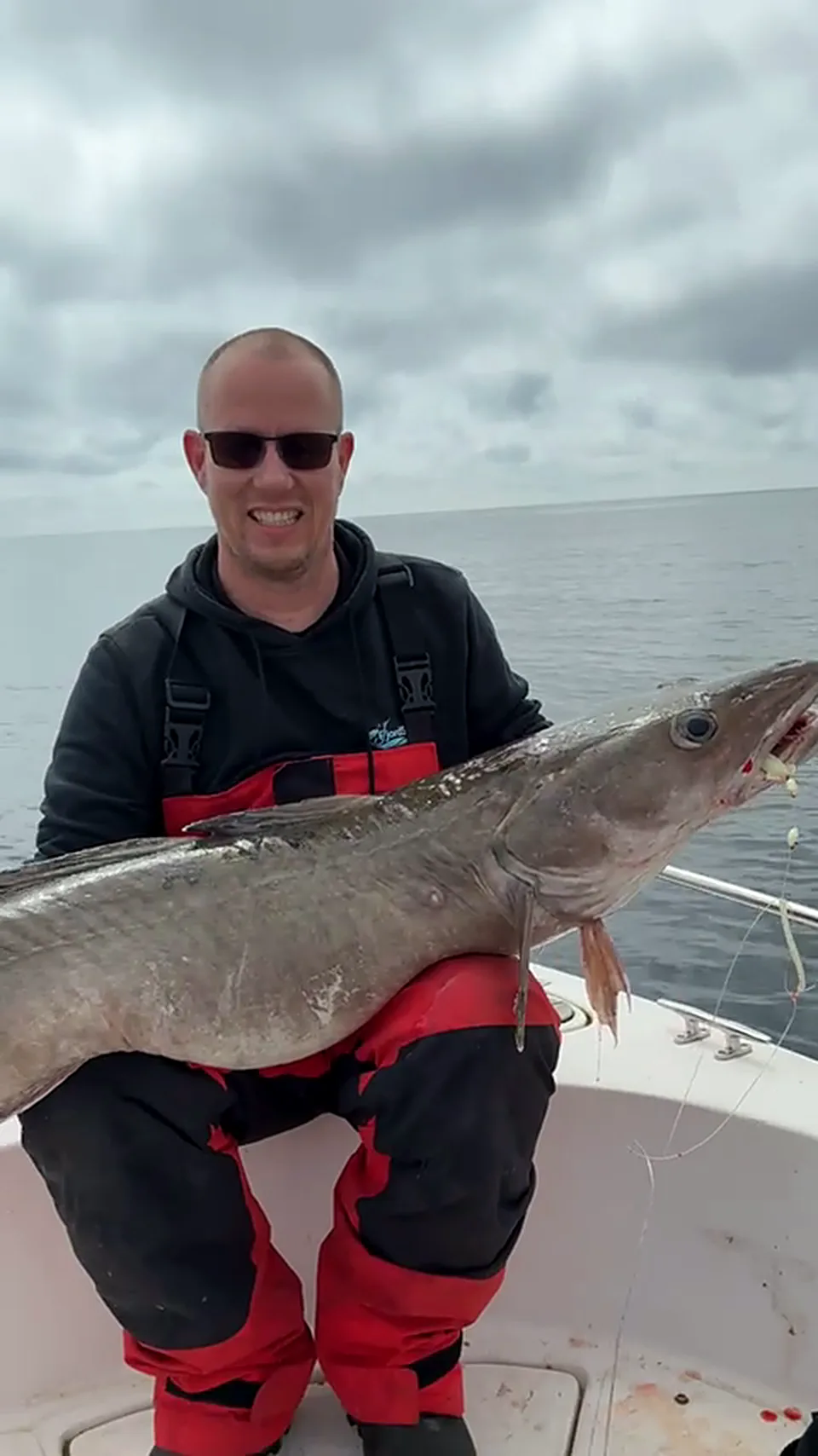
Photos from the sea: Endre Hopland, Cato Tangen and Fiskeskolen · Fisk og rask — used with permission. More photos of the crew to come.
He fishes every species
he paints
The species illustrations in FjordSpot are painted by Finland's Sakke Yrjölä — one of the Nordics' foremost fish artists, in the tradition of the classic natural-history illustrators.
His method is uncompromising: he catches the species himself. A fish starts changing colour the moment it leaves the water — so every catch is documented fresh, scale by scale, before the watercolour is painted on cotton paper.
Through his grand project Pohjolan kalat (“Fishes of Scandinavia”) he hunts the species of Nordic waters — a hunt that has brought him to Western Norway time and again. Together with Fiskeskolen and FjordSpot he has fished the deep fjords for rare species, with rod, camera and brush in the same boat.
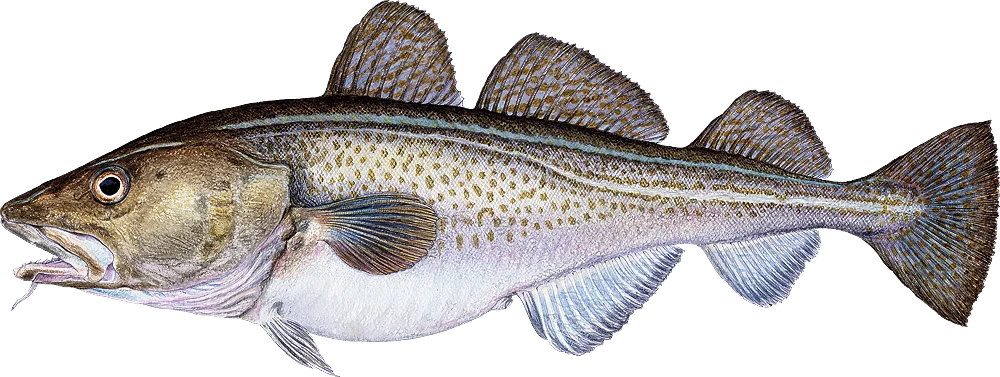
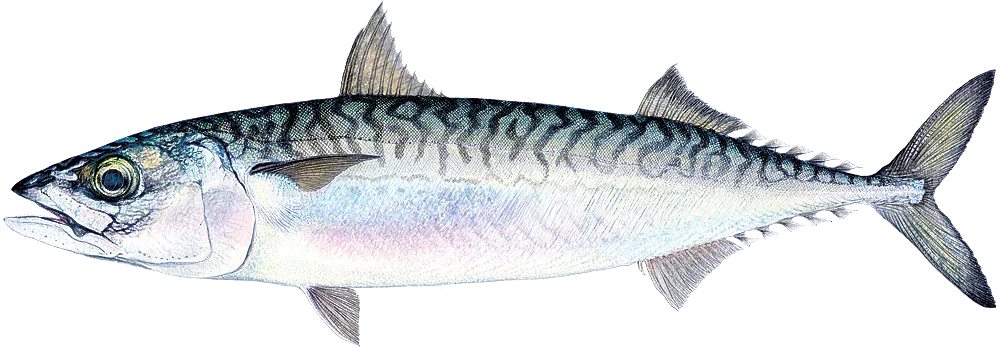
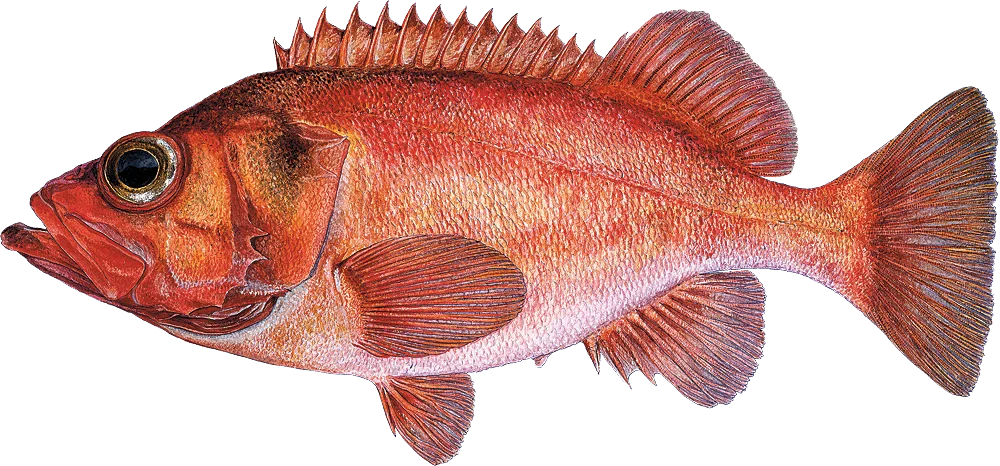
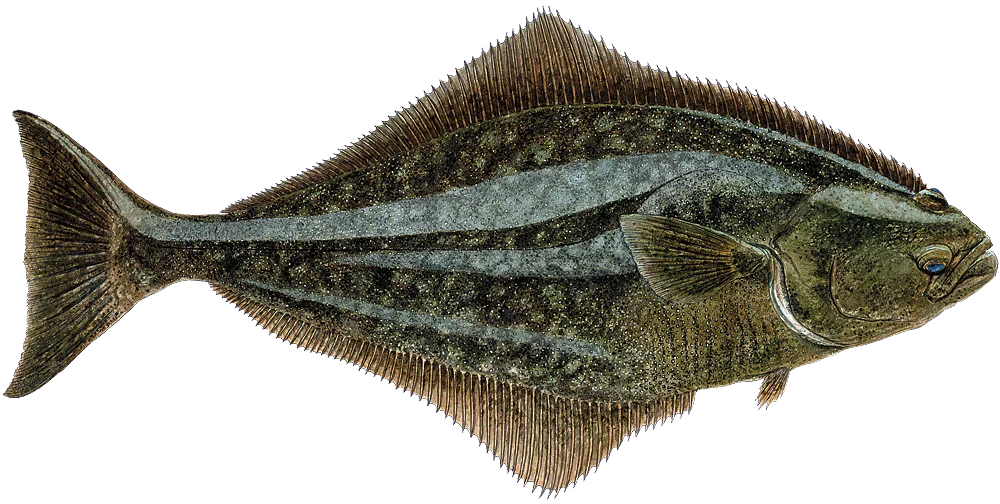
Four of the 53 species in FjordSpot that carry Sakke's brush.
All illustrations © Sakke Yrjölä · used with permission.
Tricks from seasoned anglers
Read the bottom
Fish gather where the structure changes. Use the bathymetric map to find transitions, channels and underwater peaks.
StrategyTides are everything
The best bites often come in the change between high and low water. Check the tide before you head out.
TimingLog everything
Place, time, depth, bait, weather. The catch log lets you spot the pattern — and repeat the success.
HabitFishing luck? I call it FjordSpot.
We'll happily take the credit. The fish are welcome to disagree.
TARGETABLE SPECIES
Real Norwegian data —
not guesswork.
No black box, no “secret AI.” You can see which sources lie behind every hit — and you're free to disagree.
- KartverketBathymetry and depth contours for Norwegian waters — over 10 million depth measurements.
- TidesOfficial tidal data from Kartverket, continuously updated.
- Weather & temperatureWeather forecasts from Meteorologisk institutt. Sea temperature feeds into the HSI model.
- The HSI modelHabitat suitability calculated per species from six factors: depth, slope, BPI, complexity, substrate and temperature.
All 187 species in the guide have a full HSI habitat model. 138 of them are realistically targetable in Norway; the remaining 49 — protected species, deep-water species and species rarely seen in Norwegian waters — also have an HSI profile, but aren't meant as fishing targets.
The whole sea on one map
Not just a fishing map — a detailed nautical map with the layers that actually matter, sourced straight from Norwegian agencies.
Vessel traffic & gear
- Vessel traffic (AIS)Vessels in real time around you
- Fishing gearActive gear in the water — steer clear of others' gear
Spawning grounds & fishing areas
- Spawning groundsNational spawning sites
- Fishing areasZones for active and passive gear
Coral reefs & protection
- Coral reefsRegistered reefs along the coast
- Coral reef closuresZones where trawling is banned
Marine habitats
- Seagrass meadowsFeeding grounds for coastal cod and sea trout
- Kelp forestTangle and sugar kelp
- Shell sandMineral-rich bottom
- Soft bottomMuddy bottom
Fish farms
- Farms + bufferFish farms with a 100 m no-fishing buffer
Sea & seabed
- Wave map & marine forecastWave height and sea state
- Depth contours10–200 m, built on over 10 million depth soundings
- Substrate / bottom typeRock, stone, sand and mud
- 3D seabedThe seabed in relief, camera tilted — edges and trenches are easy to spot
FjordSpot gets better together with the people who use it. Have a tip, a wish — or spotted something that doesn’t work? Send us an email — we read everything.
Start reading the fjord today
FjordSpot is free to try on the web now. The Android app is in closed testing on Google Play — create an account and we’ll let you know when it opens to everyone. On iPhone you can add FjordSpot to your home screen.